Understanding Eye Contact Struggles in Children
If you had read “Have I got one eye or two eyes?” you would know that eyes have been a talking point for my son. You would also know that he doesn’t like being looked at and I take this to mean he struggles with eye contact, but this wasn’t obvious to me at first. It was only when I was sat with the SENCO who shall not be named (I still think about her all the time, as sad as that is because she made me feel awful, absolutely awful) and she asked me did I notice anything odd about my son’s eye contact. It was only when I really thought about it then that I realised he hates being stared at, completely hates it. And by stared at I mean someone giving him a fleeting glance and him noticing, making eye contact and then shouting “Stop staring at me” at the top of his voice!
The thing is I love looking at him. He’s utterly fascinating. His facial expressions are pure gold, and he has the most incredible smile—one of those smiles that lights up a whole room. Watching him is one of my favourite things to do… but, of course, he hates being watched. So I would have to do it very sneakily. More often than not, though, he caught me and would shout at me. This went on for ages and I honestly just thought he was being argumentative but now I realise he was struggling with the eye contact. As a family we spent a lot of time consciously trying not to look at him, and that was hard. But as time has gone on and we have understood what is happening we have managed to make this work. He doesn’t get angry anymore. And the reason for that is humour. I have realised that humour can sometimes work wonders for my son. If I catch it right and make him laugh then I know I have averted a major disaster. And I have used humour with him a lot.
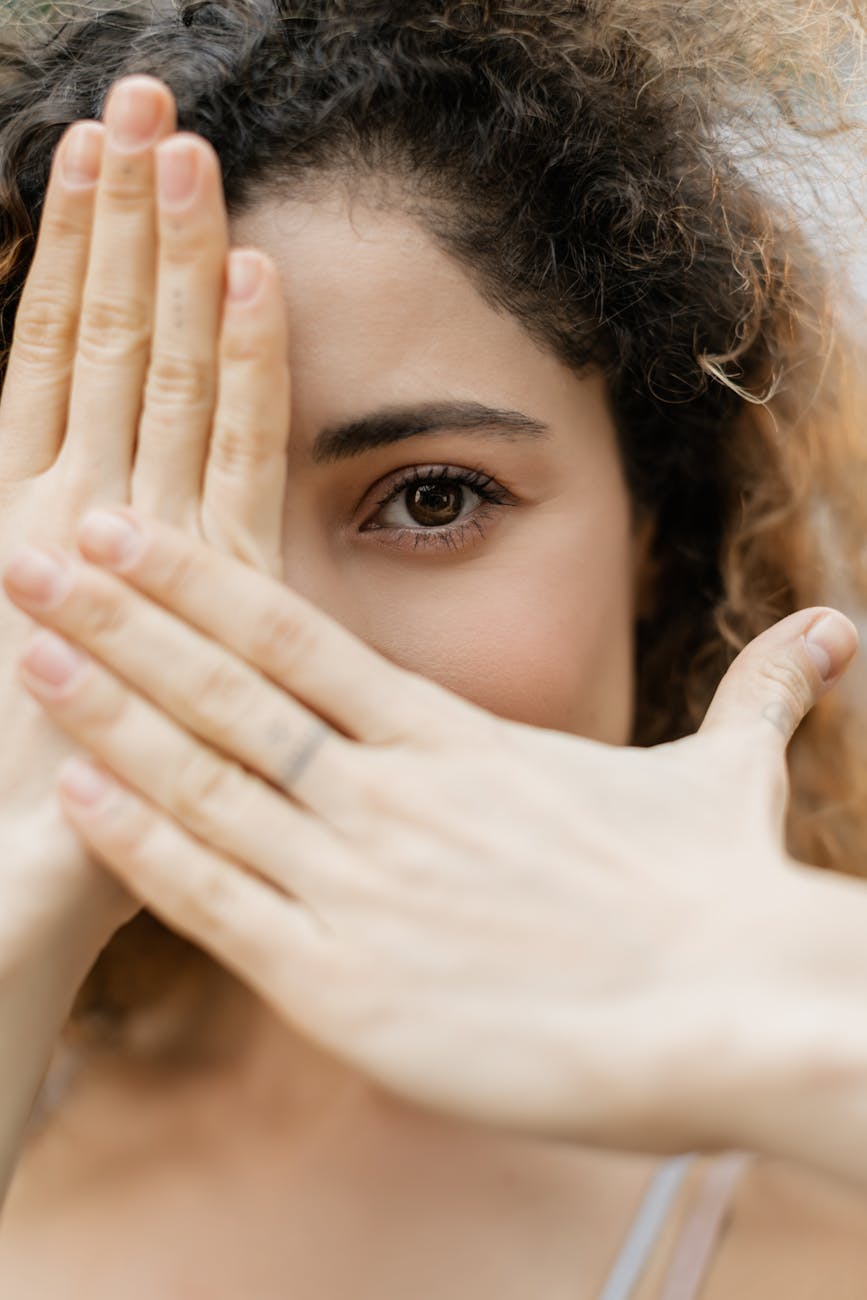
So we came up with a little ritual for when he catches us looking and we do this across the whole family. Now, if he catches one of us looking at him, he will close one eye, smirk, and ask:
“Why do you have your eye on me?”
And the person being called out? They do the same—close one eye, grin, and say the same. It’s become our thing. A simple, silly gesture that makes him feel comfortable, makes us all laugh, and somehow, makes eye contact just a little easier. I used to think eye contact was just a normal part of conversation, something everybody does without thinking. But now I know it’s not that simple. For some people, eye contact feels like pressure. It’s overwhelming, uncomfortable, even painful. And forcing it doesn’t help. It just makes everything worse. So we don’t force it.
Instead, we make it lighthearted. We turn it into a game.
The funny thing is he only ever thinks we have one eye on him. Never two. It’s always one eye. I have no idea why but as with everything I have given this some thought. Maybe two eyes would be too intense. Maybe it’s his way of making eye contact more bearable. But then another thought crept in, a memory, actually. That old question he used to ask again and again:
“Have I got one eye or two eyes, Mam?”
It used to drive me up the wall. He’d touch his eyes, then touch mine. He needed constant reassurance — daily, hourly sometimes — that he had two eyes. I thought it had started because of a silly game my mum played once, pressing her face to his and saying “Oooo you’ve only got one eye!” when their foreheads and noses were squished together. And honestly, maybe that did plant a seed. But now I wonder if there was more to it.
Because it’s always about one eye. Not two. And maybe, just maybe, it’s to do with the things we say.
- “I’ve got my eye on you.”
- “Keep an eye out.”
- “It caught my eye.”
One eye. Singular. Like we only use one.
It’s no wonder he was confused. No wonder he needed to check. He was trying to make sense of a world that says one thing but means another, and that’s something he’s always struggled with. Why would we say “Keep an eye out” when we use two eyes to see. It really doesn’t make sense so no wonder my son questioned whether he had one eye or two eyes. And no wonder now with this ritual he’s only using one eye rather than two.
So maybe the eye question wasn’t just about sight. Maybe it was about language. Maybe it was about the way we say things we don’t really mean.
So now, when he closes one eye and grins, asking “Why do you have your eye on me?” I’m reminded, again, that understanding him doesn’t always come from teaching, but from listening. Watching. Noticing the small things. Even when I’m not supposed to be looking.

 The Questions of My Child
Leave a comment