
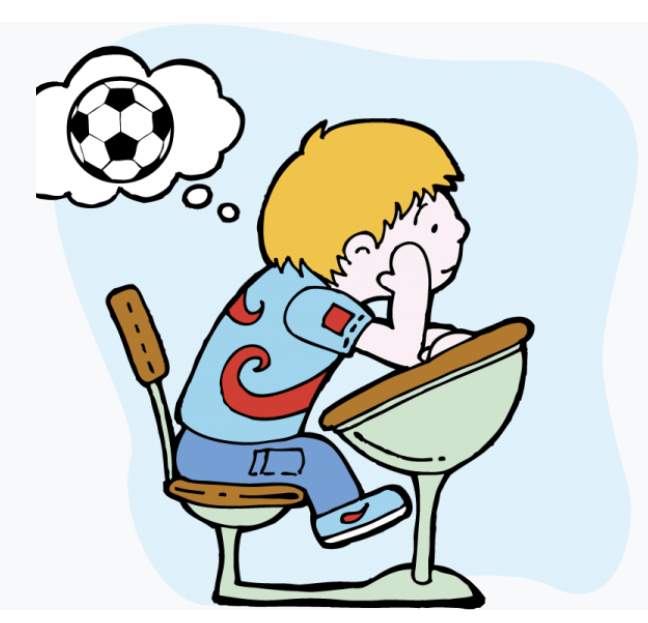
It had been a long, long day (aren’t most of them nowadays) and I knew I had a long way to go. I had been playing headers with my son where I throw a small ball and he heads it. This was the new version of goalkeepers that he liked to play. He then wanted to practice bicycle kicks but I wasn’t throwing the ball right and so he said he would throw the ball himself. So I gladly sat on his bed and watched and as I watched I drifted off into a daydream….not a particularly good daydream just started thinking about my tea, what time I would get my tea, should we start hello fresh again, what would I do if I won 100k, can I continue on working as I am etc etc all in the space of about 3 minutes. He looked at me and asked me what I was doing. I must have been pulling a funny face so I said I’m just daydreaming and he looked at me quizzical and said…
“What is a daydream?”
He definitely knows what a dream is as we have spoken about them before so it surprised me he couldn’t make the link between dream and daydream. I explained it was where your mind drifted off and you started thinking about things and sort of zoned out of the situation. I knew he didn’t get it so I tried to relate it to something I thought he might think about and said…
“Don’t you ever think about playing football for England and scoring the winning goal in the world cup final.”
He said no and laughed. And then said…
“I have no idea what you are talking about.”
Now I am a definite daydreamer. I like nothing more than playing out scenarios in my head. God knows I’ve had words several times with the SENCO and headteacher in my head. I play out winning the lottery and spending the money. I play out all sorts of things. I also use my inner voice a lot. And this reminded me of a conversation with a friend at work who used to work in the Sensory Support team (I’m going back 20 odd years ago so this was a team that supported visually impaired and hearing-impaired people primarily) and he told me that people with hearing problems didn’t hear their own voice in their head but they imagined a person signing. And I had never ever realised that, but it completely makes sense. My voice in my head is a part of me, and my daydreams are a part of me but maybe different people had these in different ways.
I now knew my son didn’t daydream or didn’t have the same concept as daydreaming as me, but I also knew the voice in his head was different to mine. And I knew this because for a long time I would ask him a question and he wouldn’t respond so then I ask him again and he will get mad saying “I’ve just told you this”. And this happened so many times. I couldn’t work it out. Until I read something on social media, a lady I followed made a post about her grown up autistic son who had told her he used to speak to her in his head and he thought she could hear. And I am almost sure that that is my son too. He says things in his head and he thinks that he has either said it out loud or that I can hear the voice is in head.
So, my son isn’t aware of day dreaming and isn’t aware that the voice in his head is just in his head. Not only that but for a long, long time my son would query about real life or not (Is this the real life?) which suggests to me that the line between internal focus and external focus is completely blurred for my son, he hasn’t quite figured it out yet. For most people, that inner voice—the one you use when you’re thinking—is tied to what’s called “inner speech.” It’s the way we silently talk to ourselves, which is part of how we think and process information. However, not everyone experiences inner speech in the same way. Studies show that some people, especially those with neurodivergent conditions, might not have the same kind of inner voice. Instead of “hearing” themselves in their head, they may process thoughts more visually or through feelings.
For my son, it seems like his inner world is quieter or maybe more chaotic, with the lines between thoughts and spoken words all tangled up. Research into autism has shown that some autistic individuals may not experience a clear division between their internal thoughts and the external world. This explains why my son would get so frustrated—he thought he had already told me what he wanted when, in reality, he had only said it to himself. It’s like he’s missing that internal “filter” that most of us have, the one that keeps track of whether we’ve actually said something out loud or just thought it.
There’s even research suggesting that the way autistic people process their inner world might be linked to differences in sensory processing and the way their brain is wired. Some studies show that autistic brains don’t switch between day dreaming and real life as efficiently as neurotypical brains do. This could explain why my son doesn’t “zone out” into daydreams like I do—his brain stays more grounded in the present moment.
But while my son’s mind might be more anchored in the present, it doesn’t mean there aren’t countless thoughts racing around in there. It’s just that he processes them differently, maybe in ways I can’t fully understand. The same sensory processing differences that make it hard for him to switch between the real world and a daydream are likely what makes his inner world such a puzzle to me. I find myself constantly trying to unlock that world—wondering how I can better understand his thoughts and how he experiences life.
So here I am, daydreaming again—this time about becoming some sort of mind-reading superhero just to keep up with my son’s whirlwind thoughts. Maybe I’ll invent a magical device that helps me hear the things he doesn’t say out loud. Or better yet, I’ll win that £100k in my daydreams and hire a team of scientists to crack the mystery! Until then, I’ll just keep throwing the ball and hoping one day he’ll tell me what’s really going on in his head—out loud this time.


 The Questions of My Child
Leave a reply to What is half of 16? – The Questions of My Child Cancel reply